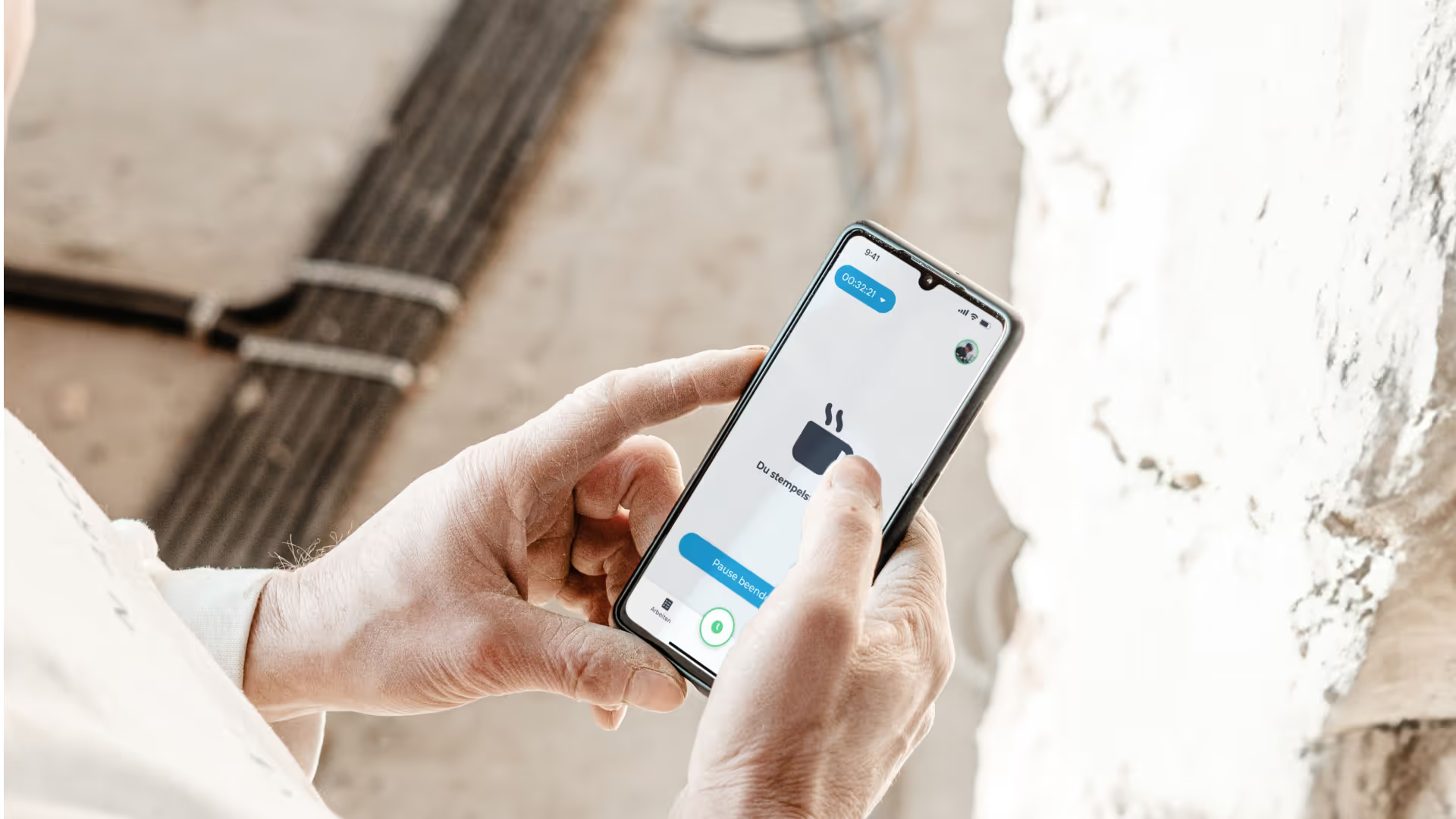

May I put my break at the end of my working hours?
The clear answer is: no – statutory breaks may not fall at the end of working hours. § 4 of the Arbeitszeitgesetz (ArbZG, the German Working Hours Act) requires breaks to be fixed in advance and taken during working hours. The aim is to make sure employees get their rest before work ends, and after six hours at the latest. A break immediately before the end of shift would miss that purpose.
Remember: breaks at the end of working hours are not permitted. They must fall within working hours.
Digital break and working time tracking made easy
With clockin you do not have to worry about whether breaks are recorded correctly. The app records break times and working hours from anywhere – in line with the German Working Hours Act. That way you always have an overview and can check that the statutory obligations are being met.

How long must the break be?
Statutory minimum breaks
The German Working Hours Act distinguishes according to the length of daily working hours:
- More than 6 and up to 9 hours of work: at least 30 minutes' break
- More than 9 hours of work: at least 45 minutes' break
Breaks can be split into blocks of at least 15 minutes each.
Does the break count as working time?
No. Breaks do not count as working time unless your employer or a collective agreement provides for them to be paid. As a rule, then, they are unpaid.
A break shortly before the end of shift – is that allowed?
A break “shortly before the end of shift” can be legally permissible – as long as it does not run straight into the end of working hours.
Example: you work until 17:00 and take your break at 16:30. That is generally permissible, because there are still working hours left after the break. Your employer may, however, prescribe when breaks are taken, provided the statutory minimum requirements are met.
Can I work more than 6 hours without a break?
No, that is not allowed. Anyone working longer than six hours must take a break. Employers are obliged to make sure these breaks are actually taken. If breaks are not granted, that breaches the German Working Hours Act.
May I leave the company premises during my break?
As a rule, yes. A rest break means you can decide freely what to do with your time – which includes leaving the company premises. Your employer may only restrict this in justified exceptional cases, for example on safety grounds or where on-call duty is required.
Common misunderstandings about breaks
“My break is included in my 8-hour shift.”
That is partly true. The break is required by law and part of your working day, but it does not count as working time.
So if you are scheduled for a shift from 10 am to 6 pm, the break is already included. Your working hours then come to only 7.5 hours despite the 8-hour shift.
If, on the other hand, you are scheduled for an 8-hour shift with no fixed times, you are expected to work 8 hours. Your actual time on the premises then comes to 8.5 hours.
“My employer can just deduct breaks.”
It is not that simple. Breaks have to be taken and documented, and your employer is obliged to make sure that you take them. They cannot simply “deduct” the break time without ensuring that you actually took it.
Conclusion: plan breaks properly
A break at the end of working hours is not allowed. Breaks must fall within working hours, be taken in good time and serve as rest. Employers are obliged to comply with the statutory rules and to make sure breaks are possible. Employees should make sure they really use their rest breaks – not just for legal reasons, but for their own health.
.png)
.avif)
.avif)